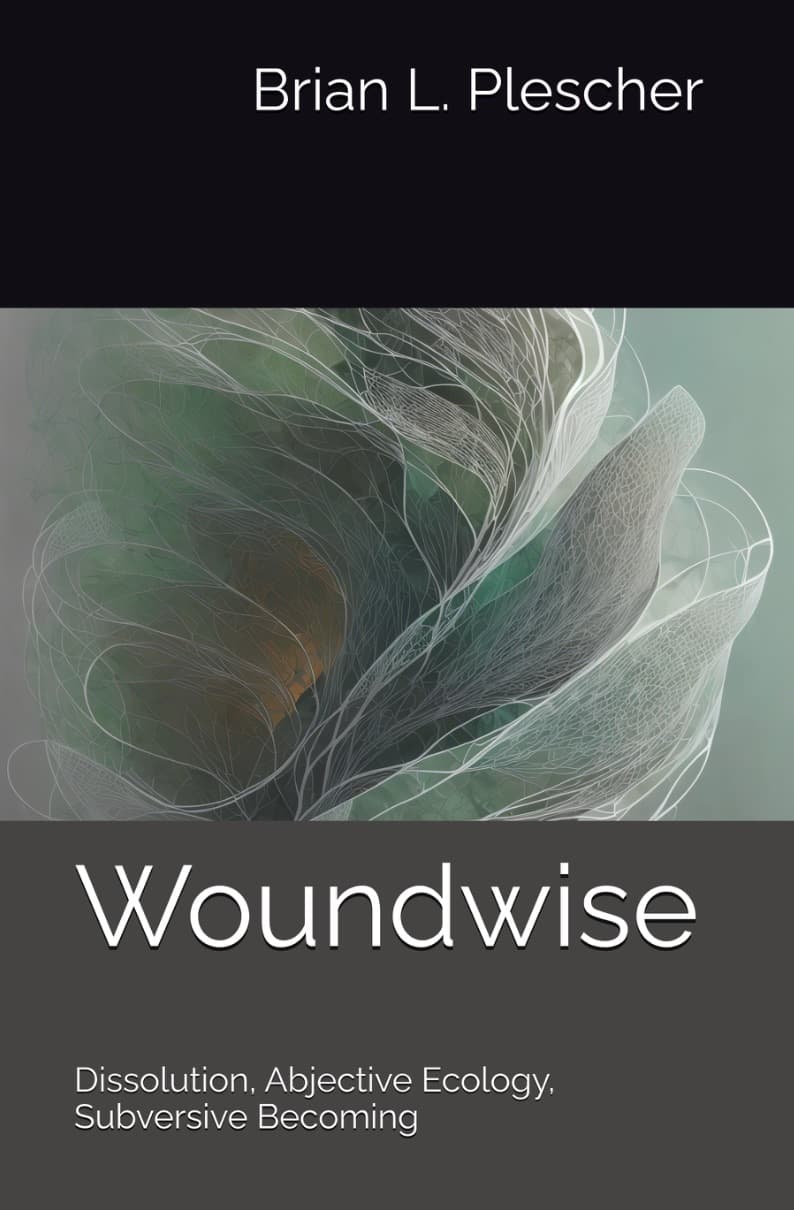
Woundwise
Post-structuralist philosophy as lived practice
A book by Brian Plescher — Second Edition
What if the ideas that seem most abstract are actually the most practical tools you have?
Post-structuralist philosophy — Kristeva on abjection, Derrida on différance, Deleuze and Guattari on assemblages and desire — has transformed how scholars understand power, identity, and social change. But most introductions to critical theory keep these concepts at the level of academic analysis.
Woundwise does something different: it treats them as lived practice, as technologies for navigating and transforming the actual conditions of life under late capitalism.
This is an introduction to critical theory and post-structuralist philosophy for readers who want to use these ideas — activists, educators, therapists, artists, organizers, and anyone who has felt the gap between intellectual understanding and embodied change.
Creative destruction as method — how Nietzsche, Bataille, and Derrida give us tools for working consciously with breakdown rather than resisting it.
Refusal as ontological practice — the difference between resistance and fundamental refusal, and how individual refusal cascades into collective transformation.
Conscious dissolution — how boundaries between self and other, human and machine, individual and collective dissolve, and what intelligence emerges from that dissolution.
Tipping points and cascade dynamics — complexity theory applied to social movements, showing how personal breakdown and collective breakdown feed each other.
Wounds as political cartography — trauma not as individual pathology but as diagnostic material for systemic analysis.
Substantially revised and expanded throughout, with new material on:
- Human-AI collaboration
- Collective wound work methodology
- Reverse diagnosis
- The visibility/invisibility dialectic in contemporary resistance movements